
Engagement Rings in India: The Complete 2026 Buying Guide
How to buy an engagement ring in India in 2026? Lab-grown vs natural, the 4Cs, IGI vs GIA certification, settings, metals, and a step-by-step checklist. Includes guidance for buying from India while living abroad.

Buying an engagement ring is usually the first serious jewellery purchase most people make. The choices pile up fast, natural or lab-grown, which certificate, which setting, which metal, how much to spend. This guide walks through each decision in order, the way an experienced jewellery consultant would, so you can buy with confidence whether you are shopping in India or buying from India while living abroad.
Start with the decision that shapes everything else: lab-grown or natural
Lab-grown diamonds are real diamonds. Same carbon crystal, same hardness, same sparkle, grown above ground instead of mined. They are graded on the same 4Cs by the same laboratories. The practical difference is price: for the same budget, a lab-grown stone is typically significantly larger or higher in quality than a natural one, and it is the Planet Friendly choice.
If you are weighing this decision, read our detailed lab-grown vs natural diamond comparison. The short version: if what matters to you is the stone on the hand and the certificate behind it, lab-grown gives you more diamond for your money. If resale tradition matters more to you, read both sides before deciding.
Browse the collection, or talk to a Varniya expert - we'll help you choose with confidence.
The 4Cs, in the order that actually matters
Most buyers are told the 4Cs as a list. It is more useful as a priority order:
| Priority | What it is | Practical advice |
|---|---|---|
| 1. Cut | How well the diamond is proportioned and polished | Never compromise here, cut is what makes a diamond sparkle. Choose Excellent/Ideal. |
| 2. Carat | Weight (and roughly, size) | Decide your size band first; consider just-under weights (0.9 ct instead of 1 ct) for better value. |
| 3. Colour | How white the diamond appears (D to Z scale) | E to F looks identical to D on the hand; G-H still faces up white in gold settings. |
| 4. Clarity | Internal marks visible under magnification | VS1 to VS2 is the sweet spot , eye-clean without paying for perfection you cannot see. |
For a deeper walk-through of each C, see our complete diamond buying guide.
Certification: do not buy without it
Every diamond engagement ring worth buying comes with an independent laboratory certificate. In India, lab-grown diamonds are most commonly certified by IGI; GIA also grades lab-grown stones. The certificate confirms the 4Cs you are paying for, and the metal should carry a BIS hallmark confirming its purity. If a seller cannot show you the certificate number before you pay, walk away. Our IGI vs GIA guide explains what each certificate covers and how to verify one online.
Choosing the setting and metal
The setting decides how the ring looks and how it wears day to day:
- Solitaire: one centre stone, the classic choice in India and the easiest to size and maintain. Browse our solitaire collection to see the range.
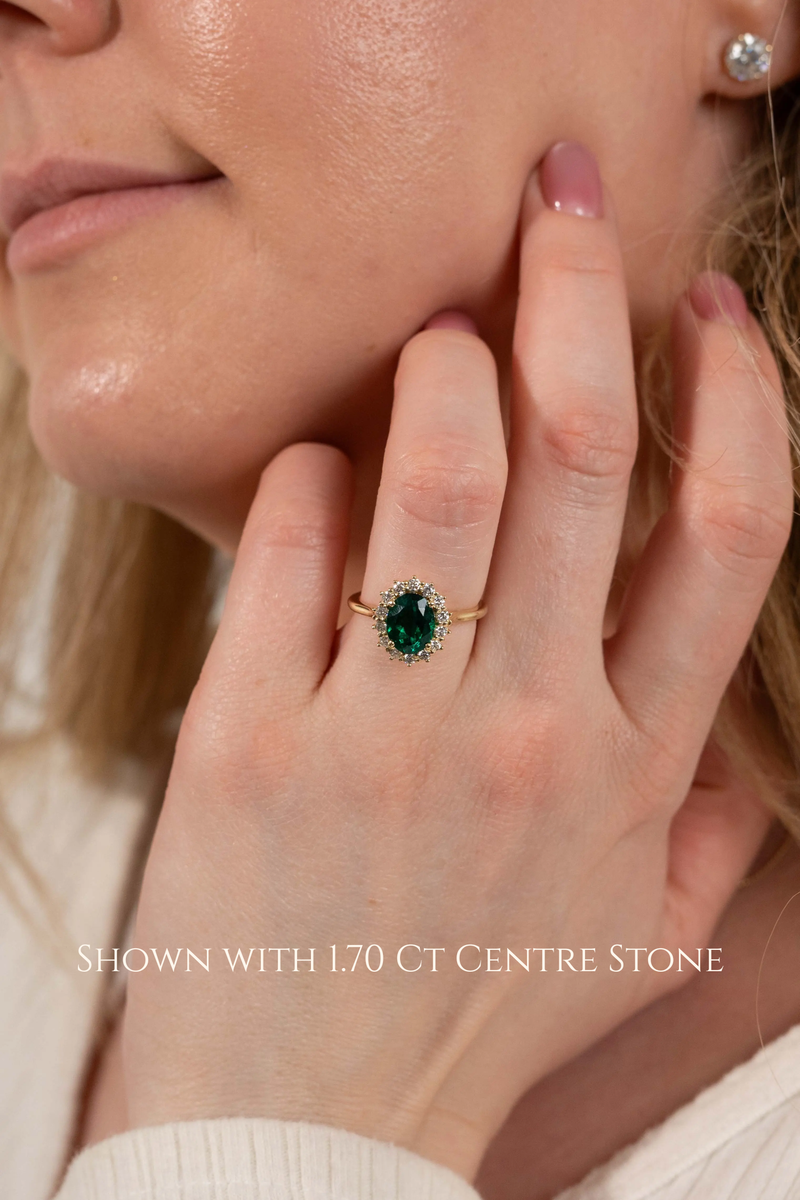
- Halo: small diamonds circle the centre stone, making it appear larger.
- Three-stone and toi et moi: two or three stones with a story (past-present-future, or the two of you).
- Pavé band: diamonds down the band for extra sparkle.
On metal: 18kt gold (yellow, white or rose) is the standard for engagement rings in India, hard enough for daily wear, with the hallmark to prove purity. Platinum is heavier and naturally white but costs more. Our engagement ring settings guide covers the pros and cons of each in detail.
How much should you spend?
Ignore the old "three months' salary" rule, it was a marketing line, not advice. A better framework: decide the number you are comfortable with, then get the best-cut certified stone that number allows. Because pricing depends on carat, cut, colour, clarity and metal weight, the honest answer is a range, not a headline number, our diamond price in India guide breaks down current per-carat rates so you can benchmark any quote you receive.
Buying an engagement ring from India while living abroad
A growing number of buyers outside India, particularly NRIs in the US, UK, UAE, Singapore and Australia buy engagement rings from Indian jewellers for the craftsmanship and the pricing. If that is you, ask any jeweller these five questions before paying:
- Is the diamond certificate (IGI/GIA) shared with me before dispatch, and can I verify it online?
- Is the invoice a proper GST invoice in my name?
- Is shipping insured door-to-door, and who bears the risk in transit?
- What duties or taxes apply in my country, and who pays them?
- What is the resize, return and repair process from overseas?
Any trusted jeweller will answer all five in writing. Varniya ships certified lab-grown diamond jewellery across India, and our team can walk you through international purchase options talk to a consultant before you order.
Your 7-step engagement ring checklist
- Set your comfortable budget (not a formula).
- Choose lab-grown or natural.
- Fix your carat band and prioritise cut.
- Pick the setting she (or he) will actually wear daily.
- Choose the metal, 18kt gold or platinum, hallmarked.
- Verify the IGI/GIA certificate number online before paying.
- Confirm ring size, resize policy and delivery timeline in writing.
Ready to look at real designs? Start with our lab-grown diamond engagement rings, every piece is IGI-certified, BIS-hallmarked and crafted with the attention to detail the House of Vummidi has been trusted for since 1900.
Frequently asked questions
What is a good budget for an engagement ring in India?
There is no correct number, spend what is comfortable and put the budget into cut quality and certification first. Lab-grown diamonds let the same budget buy a noticeably larger or finer stone than natural.
Are lab-grown diamond engagement rings real diamonds?
Yes. Lab-grown diamonds are chemically, physically and optically identical to mined diamonds, and are graded by the same laboratories (IGI, GIA) on the same 4Cs.
Which diamond certificate should I look for in India?
IGI is the most common certificate for lab-grown diamonds in India; GIA also grades lab-grown stones. Either is acceptable, what matters is that the certificate exists and the number verifies online.
Is it safe to buy an engagement ring online in India?
Yes, provided the diamond is independently certified, the metal is BIS-hallmarked, the invoice is a proper GST invoice, and the seller has a clear return and resize policy in writing.
Which engagement ring styles are most popular in India?
The solitaire remains the classic choice, followed by halo settings, three-stone rings and toi et moi designs. Round brilliant is the most popular diamond shape, with princess and oval cuts close behind.